
Prostate specialists: minimally invasive treatment with the Aquabeam system
The Aquabeam robotic system represents an innovative and less invasive surgical alternative to address benign prostatic hyperplasia.
How our surgeons use the Aquabeam robotic system
The Aquabeam system allows expert surgeons to treat benign prostatic hyperplasia (BPH), a common condition in men that causes urinary symptoms such as difficulty urinating, increased urinary frequency, or a feeling of incomplete bladder emptying.
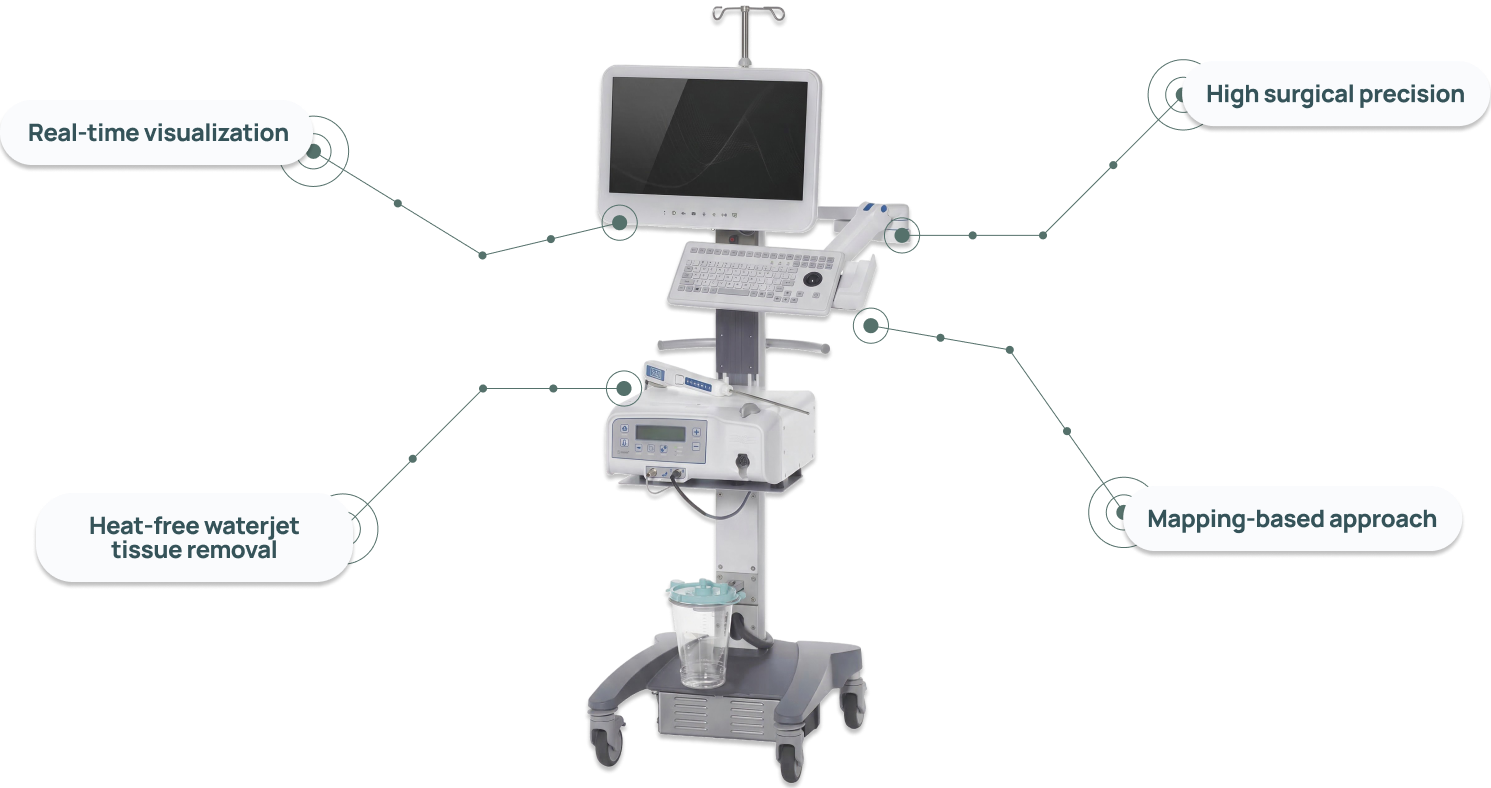
Thanks to its integration of real-time ultrasound and endoscopic technology, the specialist surgeon can precisely identify the prostatic tissue causing the obstruction. This gives them exceptional control to plan and execute the procedure with maximum accuracy and safety.
At Urovinci we have the only officially accredited specialists in Andalusia to use the Aquabeam system.
80%
Ejaculation preservation
One of the side effects that most worries patients in conventional surgeries for benign prostatic hyperplasia is the alteration of sexual function, especially the loss of ejaculation.
Thanks to the Aquabeam system, the ejaculation preservation rate is very high, reaching around 80% of patients, well above other traditional techniques such as TURP or HoLEP.
How we treat benign prostatic hyperplasia with Aquabeam technology
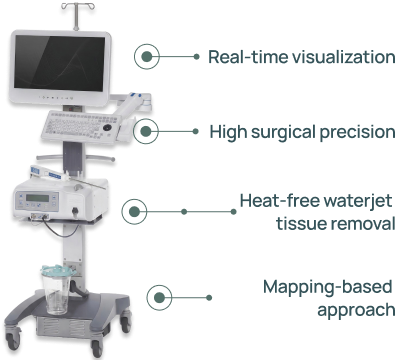
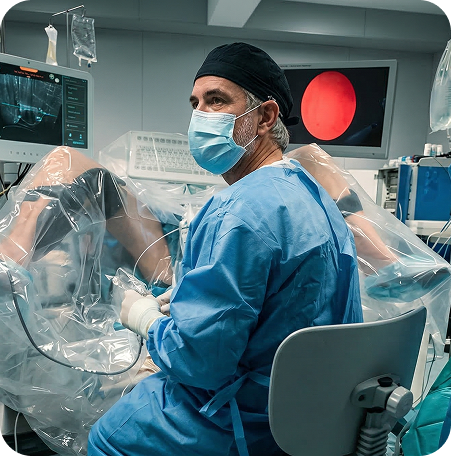
This innovative technique for treating benign prostatic hyperplasia (BPH) combines ultrasound with the use of a standard cystoscope. This integration of equipment allows the surgeon to visualize the entire prostate in real time, giving them the ability to precisely map the specific areas that need to be removed.
Once a detailed surgical map of the prostate has been created, a robotically controlled, heat-free water jet is used to remove the identified prostate tissue. Furthermore, this mapping approach prevents the surgeon from removing sections of the prostate that could lead to irreversible complications, such as incontinence or erectile and ejaculatory dysfunction.
Benefits of surgery performed by specialists using the Aquabeam system
Less invasive and bleeding
The treatment is performed through the urethra without the need for external incisions. This reduces the impact of the procedure on the body and helps to decrease bleeding, postoperative pain, and recovery time after prostate surgery.
High surgical precision
The combination of real-time ultrasound and robotic planning allows the surgeon to accurately identify the areas that need to be treated. This precision helps to remove only the prostate tissue necessary to improve urinary flow.
Preservation of sexual and urinary functions
The Aquabeam system is designed to protect the structures responsible for urinary continence and sexual function. By avoiding the use of thermal energy, it reduces the risk of damaging the nerves and sensitive tissues surrounding the prostate.
Especially useful in large or complex prostates
Aquabeam treatment can be used on prostates of varying sizes, including large prostates. This feature expands treatment options for patients who need them.
Frequently Asked Questions
Everything you need to know about Aquabeam.
Who can benefit from Aquabeam treatment?
Aquabeam treatment is indicated for men with moderate to severe symptoms of benign prostatic hyperplasia (BPH), especially when medication has not been sufficient to control urinary symptoms. The final decision regarding treatment should be made by a specialist after evaluating each individual case.
Is Aquabeam treatment suitable for enlarged prostates?
One of the advantages of Aquabeam treatment is that it can be used on prostates of varying sizes, including large prostates. This feature expands treatment options for patients who sometimes have limitations with other minimally invasive treatments.
What is the recovery like after the procedure?
After the procedure, it is common for the patient to have a urinary catheter for a short time. Hospital stays are usually brief, often just one night, and subsequent discomfort is typically mild and temporary while the body recovers.
Are there any risks or side effects?
Like any medical procedure, Aquabeam treatment can carry some risks, although these are usually infrequent. Possible discomforts include temporary urinary irritation or mild stinging when urinating during the first few days or weeks after the procedure.