
External or extracorporeal lithotripsy Shockwave therapy (SWT) is one of the treatments most commonly used and effective non-invasive methods To eliminate kidney stones, it fragments the stones without surgery and allows for a quick recovery. Thanks to its safety, convenience, and good results, it is often the first treatment option for many patients with kidney stones.
At Urovinci, we are the only center in all of Andalusia where we have all therapeutic alternatives to choose the best technology for each case.
Extracorporeal shock wave lithotripsy is especially indicated in patients with small or medium-sized kidney or ureter stones. When the stones are large, very hard, or located in hard-to-reach areas, alternatives such as ureteroscopy or other endourological procedures may be considered.
Extracorporeal shock wave lithotripsy (ESWL) is an outpatient procedure that uses high-energy shock waves applied from outside the body. These waves are precisely directed at the kidney stone, causing it to gradually fragment into small particles that the patient then eliminates naturally through urine.
It is a minimally invasive technique, without incisions and with a very quick recovery, which makes it a a highly sought-after alternative to surgical procedures. It is currently considered one of the reference techniques in urology for the management of urinary lithiasis without surgery.
In certain cases, especially when the stones are larger, located in less accessible locations, or do not respond adequately to this technique, alternatives such as ureteroscopy or other endourological options may be necessary; however, Lithotripsy is usually the first choice in many patients due to its lower aggressiveness.
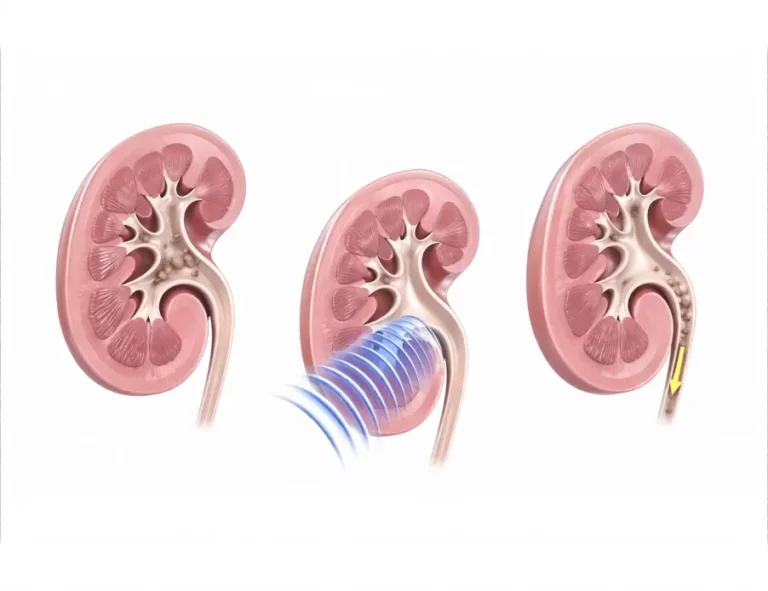
The procedure is performed on an outpatient basis, usually with light sedation or local anesthesia, and consists of applying high-energy shock waves from outside the body. These waves are precisely directed towards the kidney stone., This causes the bone to gradually break down into small fragments that are then naturally eliminated through urine. In this way, open or endoscopic surgery is avoided in many patients, resulting in a faster recovery and minimal discomfort.
Among its main advantages are its non-invasive nature, the absence of surgical incisions, and a generally rapid recovery for most patients. resumes normal activity within 24–48 hours, This makes it a safe and well-tolerated option. Furthermore, it allows for the effective treatment of many cases of kidney stones, reducing the need for more complex interventions.
At our clinic we work with Dornier's latest generation equipment, world reference in external lithotripsy, This improves the accuracy of the fragmentation of the calculations and optimizes clinical results.
Thanks to this technology and the experience of our urology team, we offer a more accurate diagnosis and a minimally invasive approach for the treatment of kidney stones, with the aim of avoiding surgery, reducing complications and promoting a rapid recovery, thus improving the patient's quality of life.
We also have state-of-the-art technology such as he holmium laser y thulium laser. While the external lithotripsy allows processing many calculations of non-invasive form, the laser technologies They offer an alternative minimally invasive and high precision in cases where access to the urinary tract is required using specialized instruments.
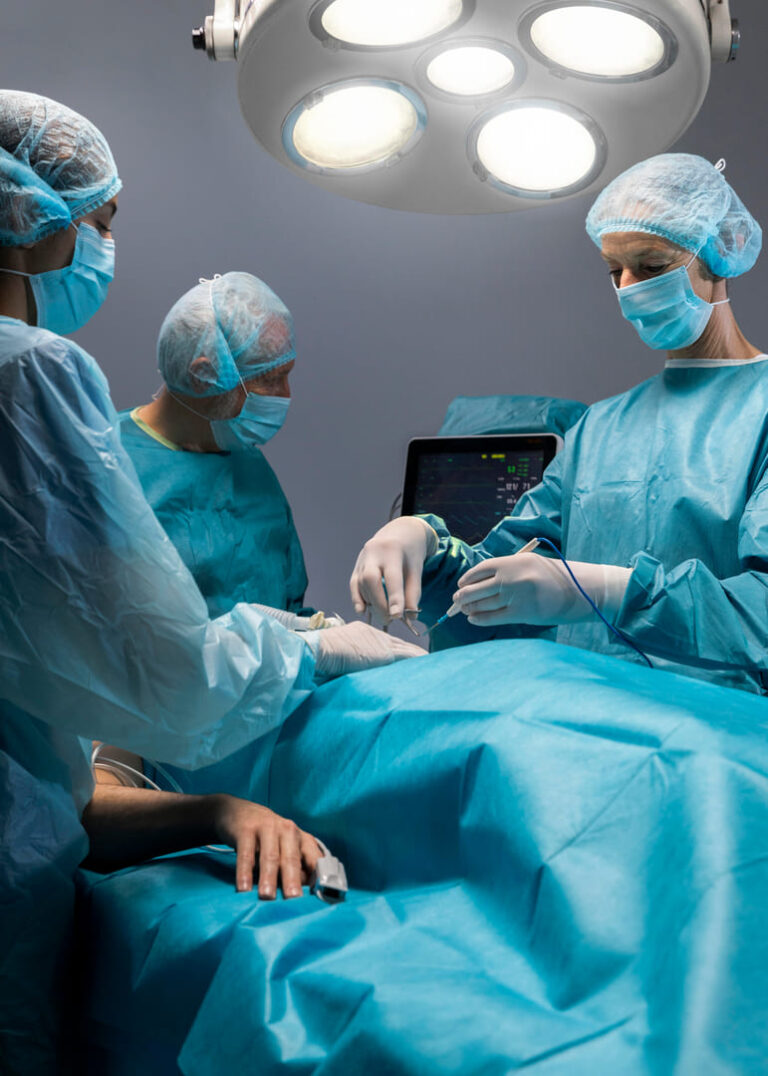
Everything you need to know about external shock wave lithotripsy.
The choice of treatment depends on the size, hardness, and location of the stone, as well as the patient's clinical characteristics.
Extracorporeal shock wave lithotripsy (ESWL) is an excellent alternative for many cases of kidney stones, but the decision should be individualized. A urologist will assess the size and composition of the stone, its exact location, the patient's symptoms, and medical history.
Extracorporeal lithotripsy offers:
Most patients resume their normal activities within 24–48 hours.
The main advantage of external shock wave lithotripsy (ESWL) is that it is a completely non-invasive technique, as it does not require inserting instruments through the urinary tract or making incisions. This allows for a more comfortable procedure for the patient, with less discomfort and a very quick recovery.
Compared to Holmium or Thulium lasers, which are minimally invasive endoscopic techniques and require access to the urinary tract using specialized instruments.